Vessel sewage pump-out in St Maarten
Sewage, also called brown water, collected alongside your vessel in St Maarten. Share your holding-tank volume, position and requested date for a written quote.
For sewage held on board
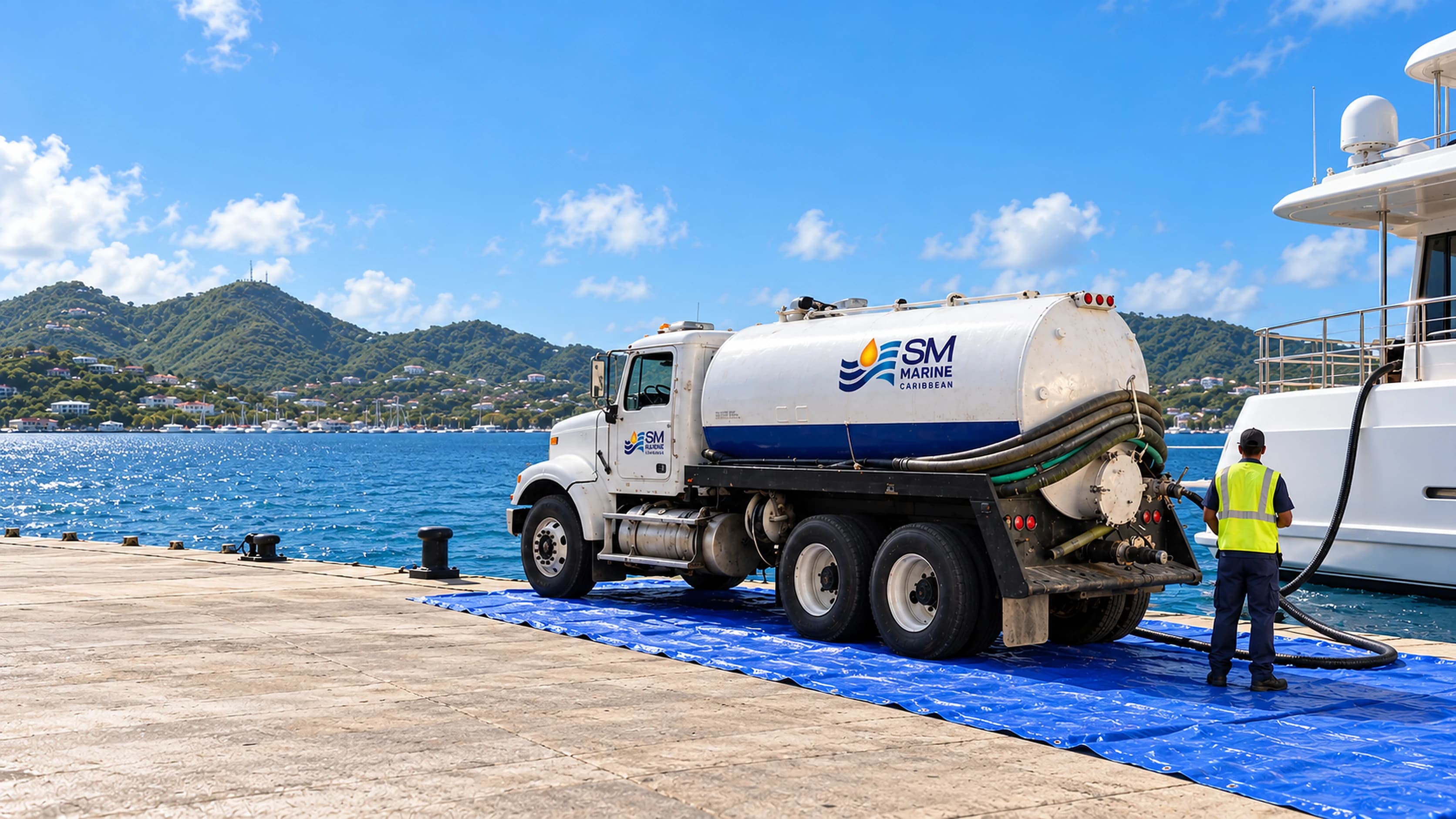
When the vessel’s sewage holding tank needs emptying before departure or during a stay, SM Caribbean can arrange collection at the quay or at anchor. Describe the tank contents as sewage or brown water when you request.
Keep the sewage request separate from waste oil, sludge or oily bilge water. If you need several streams collected, list the type and estimated volume of each so the office can review the full job.
What to send for a pump-out quote
- Vessel name and the crew contact responsible for the sewage system.
- The estimated sewage volume in litres or m³ and the holding-tank arrangement.
- Your berth, marina or anchorage, requested date and planned departure.
- The pump-out connection type, size, location and access.
- Any known transfer limits, unusual tank contents or access restrictions.
Confirm which connection serves the sewage tank; oil-waste connection details should not be assumed to apply. If you are unsure, discuss the arrangement with the office before the visit.
Prepare the pump-out connection
Make the sewage discharge point accessible and identify it for the collecting crew. Have a crew member available who knows the tank and valve arrangement. Tell the office if the volume, position or connection has changed since the quote.
Before pump-out, both crews confirm the connection and transfer plan, communication and how to stop the operation. Keep the agreed area clear and follow the vessel’s sewage-handling procedures.
This service is collection of the declared sewage. Do not treat the request as a booking for tank cleaning, pipework cleaning or pump repair.
A quote first, a receipt after
Send the collection details through the waste-service request form. SM Caribbean reviews the request and provides a written quote before the job. Agree the collection timing and connection arrangements with the office before preparing for the visit.
Every collection comes with a signed waste delivery receipt. Check that it identifies the sewage collected, the quantity, vessel, place and date, then retain it with the applicable vessel records.
Sewage is a separate waste stream from oil. Retain the receipt according to the vessel’s applicable record-keeping requirements.
Before the collection
- Before the collecting crew arrives — share the waste details and agree the connection for your vessel.
- Collection notices and receipts — check the declared waste type and the receipt fields.
Other waste on board?
Declare each waste stream and its volume separately so the office can quote the full collection.
- Waste oil collection — used oil from vessel machinery.
- Bilge water and sludge removal — declare bilge water and sludge volumes separately.
Arrange your collection.
Send the waste type, volume, position and requested date. We come back with a written quote.