
Bilge water and sludge removal in St Maarten
Oily bilge water and sludge collected alongside your vessel in St Maarten. Declare each stream, its volume and your connection details so we can quote the job.
Two streams, one clear request
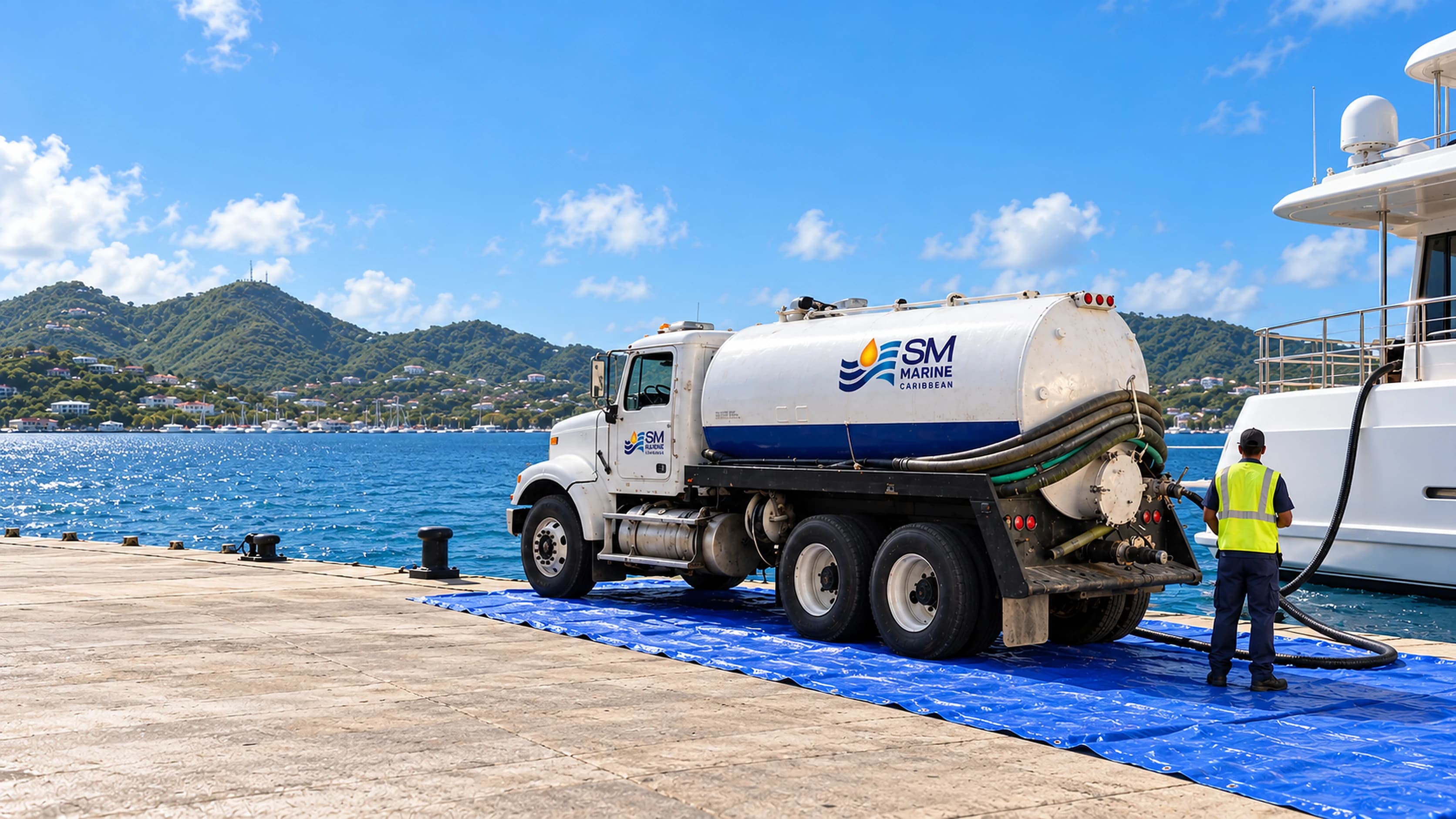
Oily bilge water is the oil-and-water mixture held in the vessel’s bilge-water system. Sludge is the heavier oil residue held separately. SM Caribbean collects both at the quay or at anchor.
Describe them separately, even when you want both collected on the same visit. The crew needs to know which tanks and discharge lines are involved. Declare unusual contents or contamination rather than treating all liquids as the same waste.
Details for the collection quote
- Vessel name, crew contact and your berth, marina or anchorage.
- Estimated oily bilge-water volume and sludge volume, separately, in litres or m³.
- The tanks and discharge connections involved, including whether they use separate lines.
- Any known pumping limits, access restrictions or unusual sludge consistency.
- The requested date and your departure time.
Tell the office if the tank contents or volume are uncertain. A written quote comes before the job; the request itself is not a confirmed collection time.
Ready the tanks and discharge point
Identify the correct tanks and lines, make the discharge point accessible and confirm the connection details before we arrive. Keep sludge, oily bilge water, waste oil and sewage separate. Tell the office about any change in the contents or quantity.
The vessel and collecting crew agree how to communicate, monitor the transfer and stop it. Have a crew member available who knows the tank arrangement and can check the quantities removed.
See the connection guide below for preparation details. Do not assume a standard connection or transfer arrangement will suit every vessel.
Check the receipt, then record the transfer
After the collection, SM Caribbean supplies a signed waste delivery receipt. Check the vessel details, transfer location and date, and the recorded waste types and quantities before filing it.
Keep the receipt with the relevant vessel records. The Oil Record Book guide explains the distinction between sludge and oily bilge-water entries. The responsible crew member should use the entry appropriate to the actual transfer and the vessel’s requirements.
For a return visit, send the new volumes, position and date; previous collection details do not confirm the next job.
Before the collection
- Discharge connection and preparation — what to confirm before the collecting crew arrives.
- Sludge and bilge-water entries — the crew guide to recording these oily-waste transfers.
- Collection paperwork — notices, receipt fields and filing details.
Other waste on board?
Declare each waste stream and its volume separately so the office can quote the full collection.
- Waste oil collection — used oil from vessel machinery.
- Vessel sewage pump-out — holding-tank sewage collected alongside.
Arrange your collection.
Send the waste type, volume, position and requested date. We come back with a written quote.